The Anatomy Behind Under-Eye Bags
The under-eye area contains three discrete fat compartments — medial, central, and lateral — that sit behind the orbital septum, a thin fibrous membrane that acts as the “curtain” holding them in place. In youth, the septum is taut and the fat remains neatly contained behind it. With age — and in some people, from early adulthood due to genetics — the septum weakens and the fat is no longer contained. It herniates forward, producing the characteristic puffiness we recognize as under-eye bags.
This is the defining feature of structural under-eye bags: they are not caused by fluid, fatigue, or lifestyle. They are the result of a change in the mechanical properties of a thin anatomical membrane. Once the septum has lost its tensile strength, it does not recover on its own.
Simultaneously, the upper cheek loses volume with age, and the facial ligaments that support the midface loosen. This causes the cheek to descend, deepening the groove between the lower eyelid and cheek — the tear trough — which creates a shadow beneath the bag and makes the entire under-eye area look darker, more hollowed, and more fatigued.
Transient vs. Structural Puffiness
Not all puffiness is the same. There is an important clinical distinction between transient and structural under-eye swelling:
Transient Puffiness
Fluid accumulation from allergies, sodium, alcohol, or sleep position. Present in the morning, reduces throughout the day. Improved by cold compresses and lifestyle changes. Not a surgical indication.
Structural Bags
Fat herniation through a weakened orbital septum. Present regardless of sleep, fluid intake, or time of day. Not improved by eye creams, cold compresses, or rest. A surgical condition.
The practical test: look in a mirror first thing in the morning, and again in the evening. If the bags reduce significantly throughout the day, you likely have transient swelling with a lifestyle or allergic component. If they remain essentially unchanged regardless of when you look, you have a structural problem.
Why Eye Creams Don’t Work
The global eye cream market generates billions of dollars in annual revenue. This is possible because the causes of under-eye aging are widely misunderstood — by patients and, frankly, by much of the beauty industry.
Eye creams can temporarily improve the appearance of fine lines by hydrating the surface of the skin. Some active ingredients (retinoids, peptides, caffeine) may produce mild cosmetic effects at the skin level. None penetrate to the orbital septum. None can mechanically restore tensile strength to a weakened membrane. None can reposition herniated fat.
This is not a failure of the ingredients — it is a mismatch between the product category and the problem. A surface treatment cannot address a structural condition. Recognising this distinction saves significant money and years of frustration.
Is Genetics a Factor?
Yes — significantly. The speed at which the orbital septum weakens and the prominence of the fat compartments are largely genetically determined. Some patients develop visible fat bags in their mid-20s; others not until their 50s or 60s. Family history is one of the strongest predictors.
Age accelerates the process, but genetic predisposition sets the timeline. Patients who come to consultation in their 30s with under-eye bags often express frustration that “nothing helps” — the answer is that their anatomy was always going to produce this result, and the cause is structural rather than behavioural.
When Surgery Becomes the Answer
Lower blepharoplasty can directly address orbital fat herniation when the anatomy is appropriate. Surgery treats the root cause — repositioning or managing the fat that has moved forward — rather than masking the surface appearance.
At EyeFACE, the preferred technique is fat transposition: the herniated fat is not simply removed but repositioned over the orbital rim into the tear trough, helping reduce the bag while softening the hollow. This helps avoid the hollowed, skeletonised appearance that can result from aggressive fat removal, because useful underlying volume is preserved.
For a deeper explanation of why orbital fat matters in both upper and lower eyelid surgery, read the EyeFACE Education™ guide to orbital fat preservation in blepharoplasty.
If your main concern is the way the under-eye area changes in different lighting, the companion guide to light, shadow, and movement in eyelid surgery explains why eye shape and motion matter so much in surgical planning.
If the lower eyelid skin itself looks thin, creased, or shadowed, it may still be a structural problem. The guide to fat support and under-eye skin quality explains why the layer beneath the skin can matter as much as the surface.
Younger patients can have structural under-eye shadows too. The EyeFACE Education™ article on under-eye hollows and dark circles in young patients explains how skeletal support, tear trough tethering, and eyelid shape can matter before age-related changes are the main issue.
Surgery is appropriate when: the bags are structural (present regardless of time of day and lifestyle), when conservative measures have not produced a satisfying result, when the patient is in good health and has realistic expectations, and when the anatomy is assessed by an oculofacial specialist as amenable to a surgical approach.
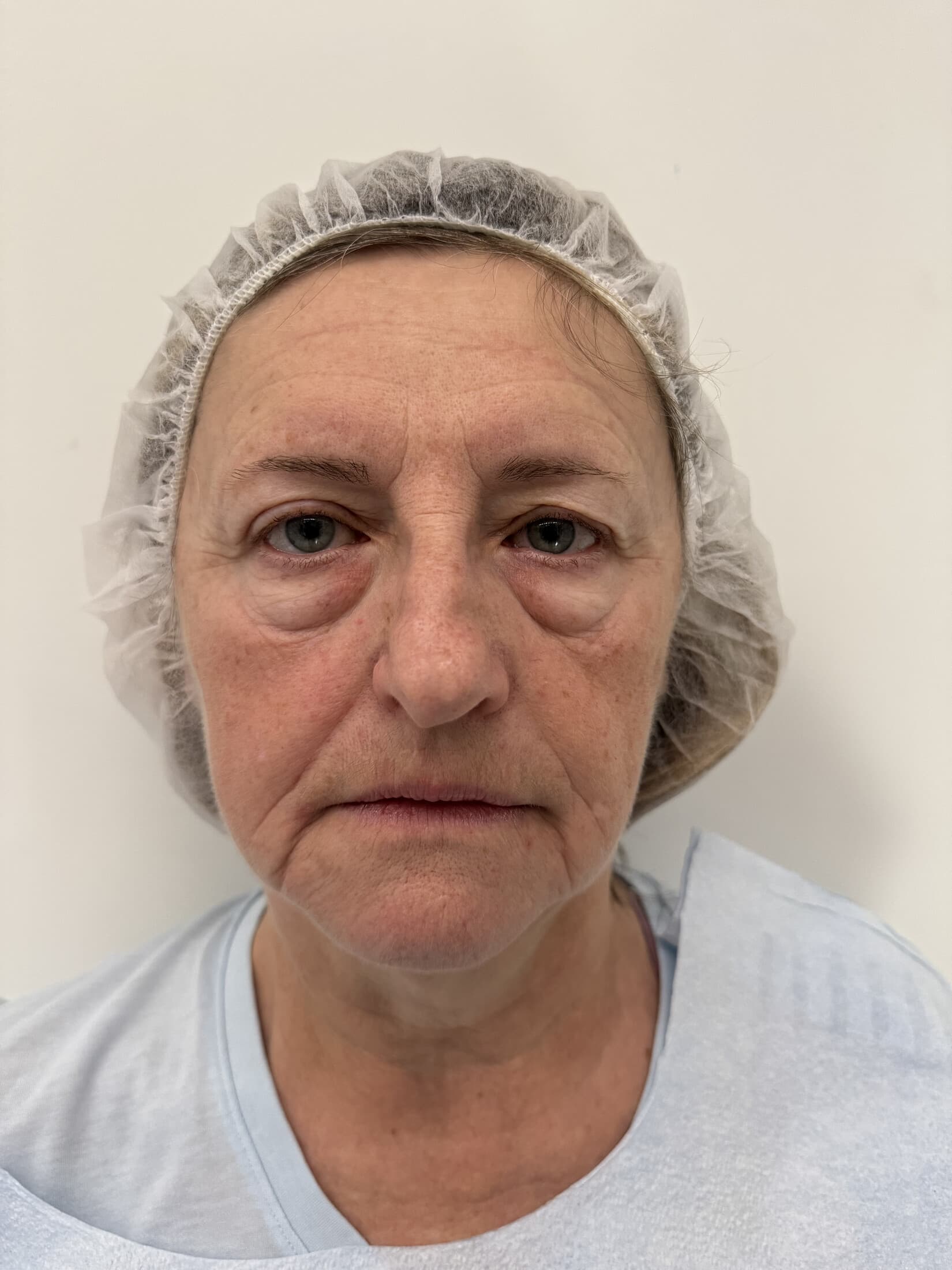 pre-treatment
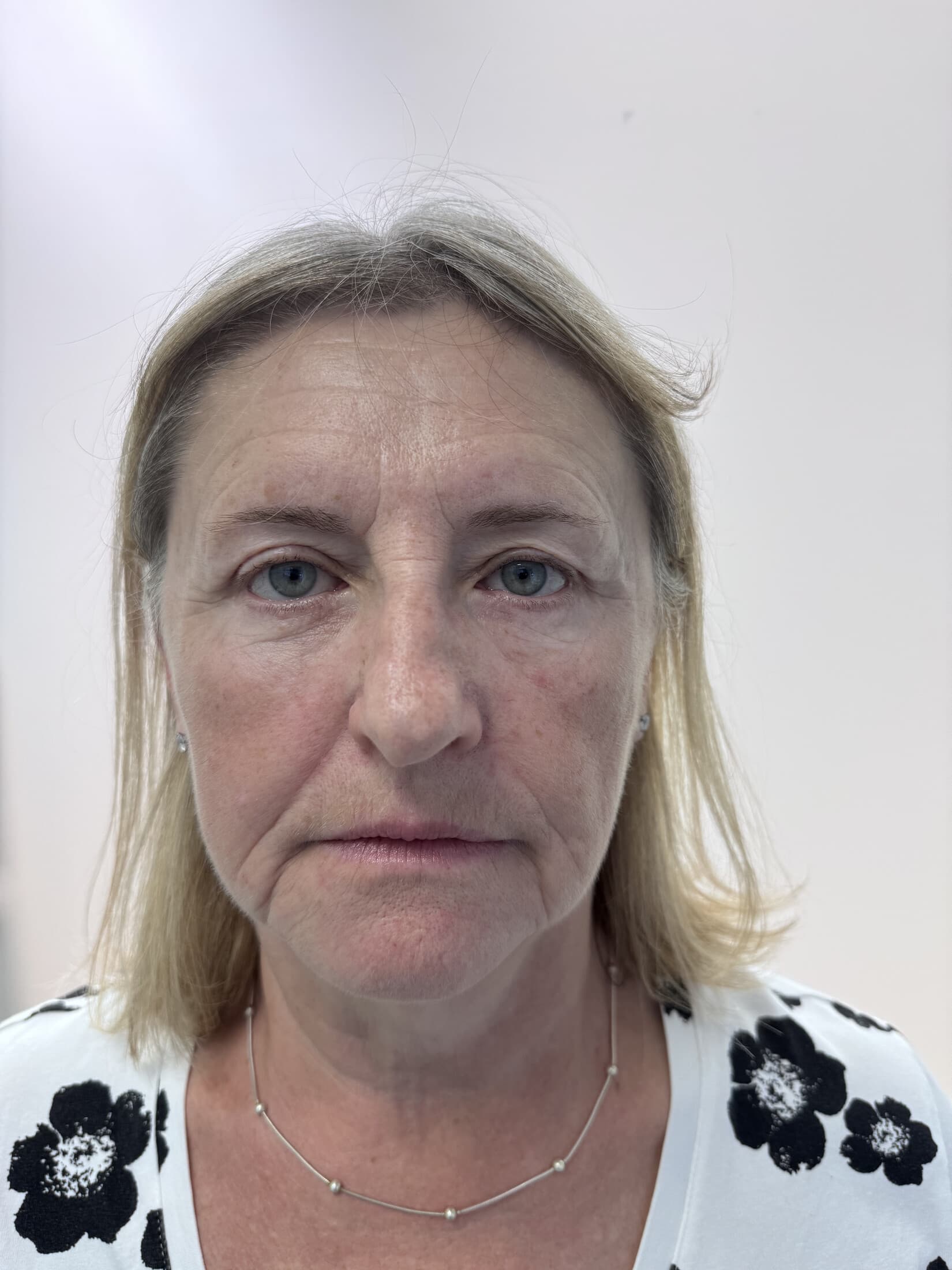 8.5 months post-treatment
Educational Case Example
Lower OFA-Bleph™ for bags, hollows, and shadowing
This educational case shows the structural bag-hollow pattern: lower eyelid fullness above, hollowing and shadowing below, and a sharper lid-cheek transition. The goal of fat transposition is to improve the contour without creating a hollowed or changed eye shape.
- Less under-eye fullness and shadowing.
- Softer transition from lower eyelid into cheek.
- Natural eye shape and expression preserved.
Educational example only. Individual anatomy, healing, and results vary.
When to Seek a Consultation
If you have persistent under-eye bags that have not responded to conservative measures, a consultation with Dr. Gill is the right next step. The consultation is a clinical assessment — not a sales appointment. Dr. Gill will examine your eyelid anatomy, determine whether fat herniation is present, explain the options available, and give you an honest recommendation about whether surgery is appropriate and what it would involve.
Many patients who come to consultation having tried “everything else” leave with a clear understanding of exactly what is happening in their lower eyelid — and a straightforward plan to address it.