Crease height
A lower, moderate, or higher crease can change the entire character of the result.
Asian Eyelid Surgery · Toronto
Double eyelid surgery and Asian blepharoplasty that respects the natural anatomy and heritage of East Asian eyelid structure.
Approximately 50% of individuals of East Asian heritage have a single eyelid — an eyelid without a defined supratarsal crease. The underlying anatomy is distinct: the levator aponeurosis inserts differently, pre-aponeurotic fat extends more inferiorly, and the orbital septum fuses with the levator at a lower level. These are not deficiencies — they are anatomical variants that require a surgeon with dedicated experience to address appropriately.
Asian eyelid surgery is not the same procedure as standard upper blepharoplasty performed on a different patient. The goals, techniques, crease placement, fat handling, and expected outcomes are all specific to this anatomy. The result should look natural to the patient's face, not copied from a generic crease template.
The goal of Asian blepharoplasty at EyeFACE is to create a crease that looks natural, proportionate, and consistent with the patient's features — not to westernise the appearance. Crease height, shape (parallel or tapered), and the handling of the epicanthal fold (if present) are all discussed individually at consultation.
Two primary techniques exist: the incisional method (which allows crease height adjustment, tissue release, and careful fat management) and the suture method (non-incisional, faster recovery, appropriate for younger patients with minimal excess tissue). Dr. Gill will advise on which is appropriate for your anatomy at consultation.
What Makes The Planning Different
A natural result depends on crease height, eyelid platform show, lash angle, pre-aponeurotic fat, skin thickness, brow position, and whether subtle ptosis is contributing to asymmetry. OFA-Bleph™ principles still apply: preserve what gives the eyelid softness, release what is tethered, and avoid hollowing from unnecessary fat removal. The aim is a crease that belongs on your face.
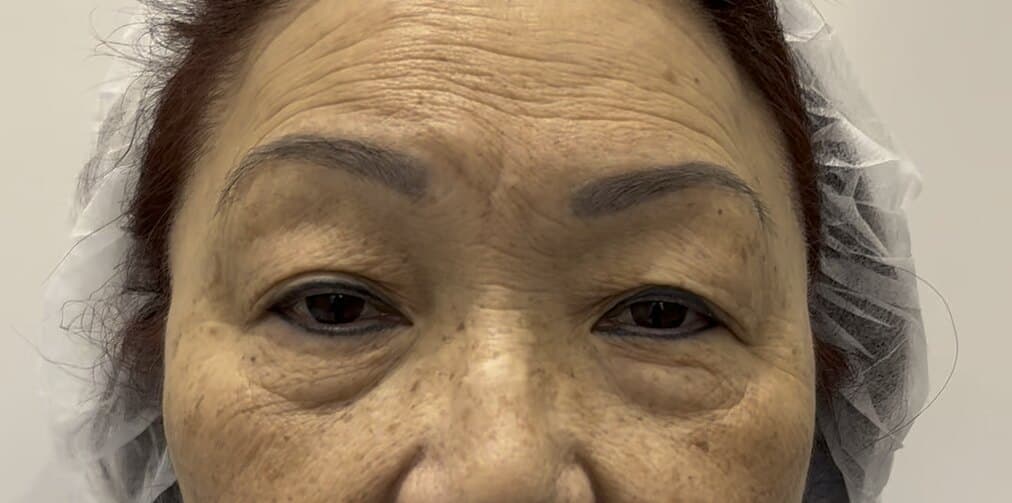
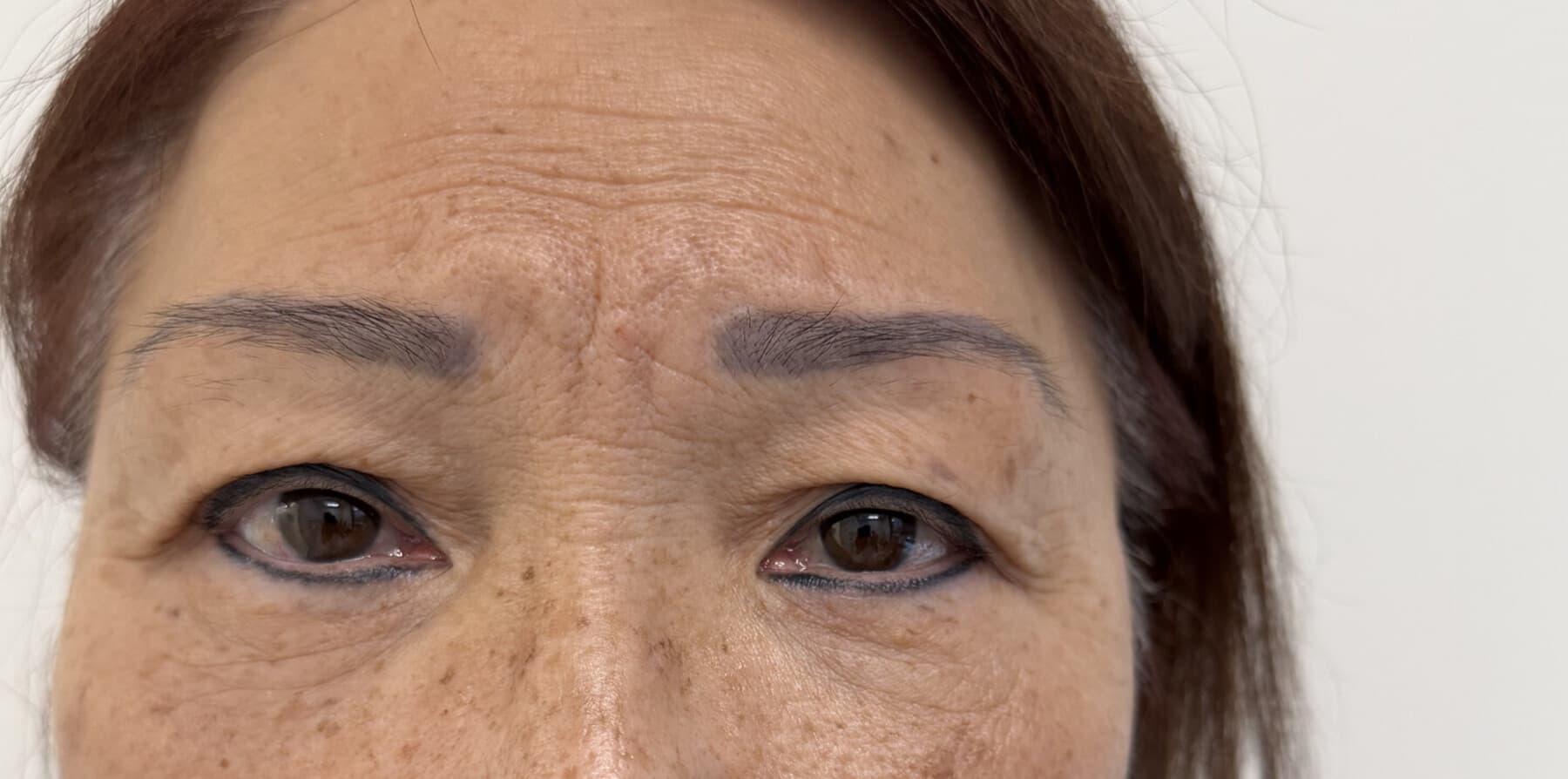
Consent-Confirmed Case Example
This cropped example is used to discuss variations in upper-lid crease anatomy commonly seen in patients of East Asian descent. The teaching point is individualized planning: crease height, eyelid platform, lid-cheek support, and preservation of the patient's natural lid character.
Educational example only. A single case does not define the right result for every patient; anatomy, goals, healing, and technique all matter.
A lower, moderate, or higher crease can change the entire character of the result.
The fold design is chosen with the inner corner anatomy and patient preference in mind.
If the eyelid muscle is weak, crease surgery alone may not create the open appearance a patient expects.
Crease design for Asian eyelid surgery is a detailed, individualised discussion. Bring photographs of results you admire — this helps communicate your aesthetic goals clearly.
Book Online →Not ready to choose a consultation yet? Begin through our secure patient portal so our team can review your goals and photos before recommending the right next step.
A treatment plan is confirmed after the appropriate review, clinical consultation, and care planning.
Privacy Preferences
EyeFACE uses essential cookies for site function. Optional analytics and future marketing tools stay off unless you allow them.
Privacy policy